Monday, March 14, 2022

What's On Your Three Lists?


“The best laid schemes o' mice an' men ... "

Robert Burns could have been a museum planner.  Despite the best laid schemes for our museum and exhibit projects, things often do go awry.  Whether it happens during the initial stages of value engineering (often providing neither "value" nor "engineering") or just before the opening of a new building or exhibition, the harsh realities of schedules and budgets often squeeze our hopes and dreams like a vise.

In an effort to shake myself out of the funk that often accompanies different parts of the exhibit/museum development process, I've taken to creating three lists for myself and suggesting that clients do the same.

What are the titles of those three lists, you ask? 

• Things that MUST happen before opening

• Things that would be NICE to happen before opening

• Things that ABSOLUTELY WON'T HAPPEN until after opening

Exactly which things you put on your lists will vary from project to project, and situation to situation.  (It's a pretty sure bet your new museum will need working front doors on your first day, but if a few staff office chairs arrive a week late, it's probably not a reason to cancel the opening gala.)  But to proceed otherwise, as if everything on all the punch lists and wish lists and to-do lists will happen before opening, is at best, a rookie mistake, or at worst, a one-way express ticket to Looneyville.

So pause a moment to process the bad news you just got from your General Contractor (or Director or Fire Marshall or Lead Designer ...) take a deep breath, and gather your team together to start putting together your three lists.

Your project (not to mention your health and sanity) will be better for it.


Don't miss out on any ExhibiTricks posts! It's easy to get updates via email or your favorite news reader. Just click the "Sign up for Free ExhibiTricks Blog Updates" link on the upper right side of the blog.

Paul Orselli writes the posts on ExhibiTricks. Paul likes to combine interesting people, ideas, and materials to make exhibits (and entire museums!) with his company POW! (Paul Orselli Workshop, Inc.) Let's work on a project together!

If you enjoy the blog, you can help keep it free to read and free from ads by supporting ExhibiTricks through our PayPal "Tip Jar"

Saturday, March 5, 2022

Cool Museum Exhibit Design Tool: Spoonflower Custom Fabrics


Spoonflower is a cool website that lets you turn your ideas into real fabric creations!

Spoonflower gives people the power to print their own designs (like the one above) on fabric, wallpaper, or gift wrap. The idea is that you upload a digital image (or use the Spoonflower imaging tools) to the website and then Spoonflower prints the design on a range of materials (of your choice) that they ship directly to you.

You can see some real-life examples and read commentary on using different materials and techniques via the Spoonflower blog

All in all, Spoonflower's services provide another interesting resource to add to your design toolbox! 


Don't miss out on any ExhibiTricks posts! It's easy to get updates via email or your favorite news reader. Just click the "Sign up for Free ExhibiTricks Blog Updates" link on the upper right side of the blog.

Paul Orselli writes the posts on ExhibiTricks. Paul likes to combine interesting people, ideas, and materials to make exhibits (and entire museums!) with his company POW! (Paul Orselli Workshop, Inc.) Let's work on a project together!

If you enjoy the blog, you can help keep it free to read and free from ads by supporting ExhibiTricks through our PayPal "Tip Jar"

Wednesday, February 16, 2022

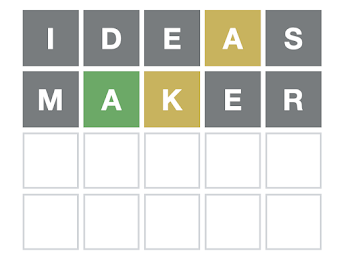
4 Things Museum Exhibit Designers Can Learn From Wordle


Wordle is a massively popular online word game.  Whether you play the game or not, there are four important aspects of Wordle that every exhibit and experience designer should keep in mind.

1) Approachability
The rules and gameplay of Wordle are easy to learn and easy to understand.  There are no long and complicated instructions.  In fact, an experienced player could explain the game to a brand-new player in seconds.  Intuitive experiences are ones that a wide range of users can engage with right away.

2) Desireability
Wordle is only available to play once a day.  I think the fact that you can't really "binge" Wordle builds up a level of anticipation in players and creates something they look forward to.

3) Flexibility
Even though Wordle is fairly simple to play, the design and structure of the game invite players to try a variety of strategies.  Some people always use the same starting word, while others try different words every day.  Some players think it's important to use vowels right away, while others think exactly the opposite.  Like many design challenges, there is usually not just one right answer or approach.

4) Shareability
Lastly, even though Wordle is an online game, it lends itself to social dynamics.  Many people (myself included!) share their daily scores with family or friends, and the big "SHARE" button that pops up at the end of every game encourages that social sharing.


If you don't already play Wordle, give it a try.  Who knows, it might inspire your next design project!


Don't miss out on any ExhibiTricks posts! It's easy to get updates via email or your favorite news reader. Just click the "Sign up for Free ExhibiTricks Blog Updates" link on the upper right side of the blog.

Paul Orselli writes the posts on ExhibiTricks. Paul likes to combine interesting people, ideas, and materials to make exhibits (and entire museums!) with his company POW! (Paul Orselli Workshop, Inc.) Let's work on a project together!

If you enjoy the blog, you can help keep it free to read and free from ads by supporting ExhibiTricks through our PayPal "Tip Jar"

Monday, February 7, 2022

Synchronizing Art and Science Activities -- A Guest Post from Bernie Zubrowski


Bernie Zubrowski is an artist and educator whose work at the Boston Children's Museum (including the "Bubbles" and "Raceways" exhibitions) continues to influence museums around the world.

Recently Bernie created a website that shares ideas about synchronizing art and science activities, and he was kind enough to share his thoughts on the subject in the guest post below:


In recent years, the role of the arts in education has gained increasing attention. Some educators have argued for the inclusion of art with STEM subjects now promoting STEAM (Science, Technology, Engineering, Art, Math). There have been a number of long-term studies that have established the benefits of more art activities in the school day justifying this inclusion. 

Some current approaches integrate art into science or science into art.  A quick internet survey of activities that integrate art and science indicates insufficient time is allotted for art skills, expression, and the development of scientific concepts.  A report by Hetland and Winner (2001) summarized various research on the impact on students learning regarding the transfer of skills and knowledge from the arts to other subjects. Significantly, they advocate for art education as a separate undertaking in itself, because "The primary justification for art education should remain the intrinsic importance of the arts and the skill that they develop." (p. 15).  Likewise, science educators recognize that an in-depth investigation is necessary for students to fully grasp basic concepts.
 
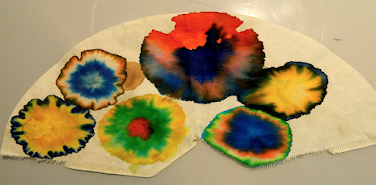
These considerations lead to a need for an in-depth approach, where skills and concepts can be developed in an authentic manner while there is still an integral connection between art and science. One possible approach is to explore and investigate a common phenomenon, artifact, or organism, where there are parallel synchronized investigations in the art and science class. Light and shadows, mirrors, mobiles, or pond organisms, among others, are examples where there can be synchronized investigations. 

Leonardo DaVinci is an exemplar of this approach. In Walter Isaacson’s biography of DaVinci, he points out that at times DaVinci gave his full attention to exploring phenomena such as air and water movement, without regard to its artistic import. However, these explorations would later shape how he painted natural scenes.

This synchronized approach would have a parallel structure where students in science classes explore the properties of light by developing physical science concepts, and in art classes by exploring the properties of light to create drawings, paintings, and sculptures that express their affective reaction. The explorations in art can result in a personal connection to the phenomenon, adding to the students’ motivation. In science, the investigation can lead to a deeper understanding of a part of the natural world.

In other parts of the website, there is an extended and in-depth development of a rationale for this approach and its pedagogical implications. There are also outlines of investigations showing how Art and Science activities can be synchronized. 


Don't miss out on any ExhibiTricks posts! It's easy to get updates via email or your favorite news reader. Just click the "Sign up for Free ExhibiTricks Blog Updates" link on the upper right side of the blog.

Paul Orselli writes the posts on ExhibiTricks. Paul likes to combine interesting people, ideas, and materials to make exhibits (and entire museums!) with his company POW! (Paul Orselli Workshop, Inc.) Let's work on a project together!

If you enjoy the blog, you can help keep it free to read and free from ads by supporting ExhibiTricks through our PayPal "Tip Jar"

Friday, January 28, 2022

Three Mistakes to Avoid When Designing Spaces for Children

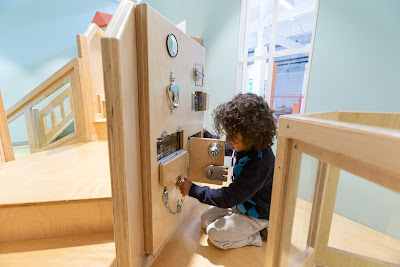
Photo credit: Matthew Clowney

Margaret Middleton is an independent exhibit designer and museum consultant. Middleton developed the popular Family Inclusive Language Chart and consults with museums on implementing inclusive practice. See their work at margaretmiddleton.com and follow them on Twitter @magmidd

Margaret was kind enough to share the guest post below based on their design work and contributions to the recent book, Welcoming Young Children into the Museum


Increasingly traditional museums for “general audiences” are listening to calls to improve their offerings for young visitors. As a former children’s museum designer, I am thrilled to see art museums and historical sites taking children’s museum experiences seriously. From kits of tools for looking at art to special labels and activities integrated into gallery experiences to dedicated spaces for little ones to learn through play, every effort to serve young visitors and their families is an important step in making the museum a place for everyone.

At the same time, there are a few common mistakes that museums make in their endeavors to serve toddlers and pre-schoolers. Here I focus on three mistakes I see most often and how to avoid them. All the recommendations I make here are drawn from the book Welcoming Young Children into the Museum by Sarah Erdman and Nhi Nguyen, for which I contributed a chapter about exhibits. Written by and for museum practitioners, this book is a thoughtful, useful guide to meeting the unique needs of children 5 years old and under in the museum.   


1. “Kids” as a single visitor category

The needs of a preschooler are typically very different from the needs of an elementary-age child and museum experiences should reflect this in activities, labels, and physical space.
 
To meet young children’s developmental needs in the museum, define who you mean by “children” and create activities with specific ages and stages in mind. Children 5 and under are typically not yet reading or writing and they are physically smaller than upper elementary-aged children. Be sure that the accompanying furniture you choose and the labels you write match the developmental stage of the activity.

For example, if you’ve designed an activity for preschool-age children like block stacking or color matching, be sure the activity doesn’t require reading and the seats are no higher than 12”. Use an anthropometric chart like this one (https://universityfc.com/table-and-chair-sizing-chart/) to choose appropriate-sized furniture and hang heights for your audience. (We include an anthropometric chart on page 99 of Welcoming Young Children into the Museum.) Write accompanying labels for adult caregivers to read aloud to their child(ren) to help them facilitate the activity or to give context so adults can understand how the activity meets the learning goals of the exhibit.


2.  Focusing only on facts

Successful programs and exhibits for young children don’t only emphasize imparting content.
 
Instead of offering watered-down versions of content for grown-ups and aiming for only fact-based learning outcomes, museum experiences that center young children should meet them where they are developmentally. For young children, every day is a learning experience as they see new things for the first time, learn new words, and practice life skills that adults take for granted, like zipping up a jacket or navigating a staircase.
 
Consider experiential, relational, and attitudinal goals instead. In other words, focus not on what content a child retains but on what a child does, with whom, and how they feel about it.

(From Welcoming Young Children into the Museum, p 92.)


3.  Under-Staffing

Staff play an essential role in whether young children and their caregivers feel welcome in the museum.

You can plan thoughtful spaces with developmentally-appropriate activities, but just as much attention needs to be given to the staff who will care for the space. Gallery guides need to be given adequate time in their schedules to tidy up the exhibits, resources to swap out broken or worn parts, and training to engage with young children. And if staff were hired before you introduced special exhibits for young children, they may not be prepared to serve this new audience. Regular training can help docents get comfortable working with young children and their families. Chapter 6 of Welcoming Young Children into the Museum details the ins and outs of staff training including anti-bias/anti-racist pedagogy and how to support marginalized staff members.

Positive museum experiences can help young children make positive associations with learning and opportunities to see significant adults in their lives demonstrating their own curiosity about the world. And for adults who care for young children, child-friendly museum experiences provide space for bonding, making memories, and sharing their interests and values. Welcoming young children in museums is not easy, but it’s worth it. It’s an iterative process and mistakes are inevitable so keep listening to your visitors and trying new things. Good luck with your new initiatives!


Thanks, Margaret for sharing your thoughts with ExhibiTricks readers!


AND NOW FOR THE FREE BOOK GIVEAWAY!

If you would like a chance to win a free copy of Welcoming Young Children into the Museum there are two different ways to enter:

1) Simply send an email to < info@orselli.net > with the subject line "I want to win a book!" before February 13, 2022.

2) Just click the link at the upper right of the main ExhibiTricks page that says "Sign up NOW for Free ExhibiTricks Blog Updates" and sign up before February 13, 2022.

On February 14, 2022, we will randomly choose one email submitter and one new subscriber to the ExhibiTricks updates to receive their books.  GOOD LUCK!

CONTEST UPDATE: Congrats to Susan K. and Judy H. for being the book winners!


Don't miss out on any ExhibiTricks posts! It's easy to get updates via email or your favorite news reader. Just click the "Sign up for Free ExhibiTricks Blog Updates" link on the upper right side of the blog.

Paul Orselli writes the posts on ExhibiTricks. Paul likes to combine interesting people, ideas, and materials to make exhibits (and entire museums!) with his company POW! (Paul Orselli Workshop, Inc.) Let's work on a project together!

If you enjoy the blog, you can help keep it free to read and free from ads by supporting ExhibiTricks through our PayPal "Tip Jar"
Saturday, January 22, 2022

2 Cool Tools: Cleanup.pictures and ClipDrop


Even if you are not a graphic designer, you probably need to occasionally "tweak" images for your work -- tasks like simply removing backgrounds or removing individual objects from photos.

To that end, allow me to recommend two tools, Cleanup.pictures and ClipDrop.

Cleanup.pictures is an intuitive online tool that lets you remove objects, people, text, or defects from images.


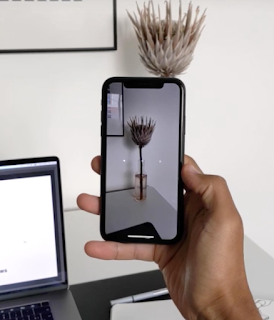
ClipDrop actually uses AR (Augmented Reality) to allow you to accurately remove the backgrounds from photos you take, or existing photos on your device.  ClipDrop then lets you drop the clean image directly onto your desktop -- which is super cool!


I hope you enjoy exploring these tools.  Which "cool tools" do you use to help your workflow?  Let us know in the "Comments" section below!


Don't miss out on any ExhibiTricks posts! It's easy to get updates via email or your favorite news reader. Just click the "Sign up for Free ExhibiTricks Blog Updates" link on the upper right side of the blog.

Paul Orselli writes the posts on ExhibiTricks. Paul likes to combine interesting people, ideas, and materials to make exhibits (and entire museums!) with his company POW! (Paul Orselli Workshop, Inc.) Let's work on a project together!

If you enjoy the blog, you can help keep it free to read and free from ads by supporting ExhibiTricks through our PayPal "Tip Jar"