Showing posts with label Austin Kleon. Show all posts

Sunday, October 30, 2022

Newsletters as Idea Nets

I subscribe to quite a few digital newsletters.  I find great inspiration in the ideas and resources that the authors come up with -- not to mention useful sites or tools I might have never come across myself.  So, I thought I would share four of my favorite "idea nets" below:


Every other Tuesday author Daniel Pink shares a short (usually around two minutes) video along with a paragraph or two of ideas that recently caught his attention. Short. On-point. Highly recommended. 


Electric Speed is writer Jane Friedman's free email newsletter with all-original content, focusing on digital tools and helpful resources for writers. It arrives every other Saturday morning.

When you subscribe, you'll immediately receive a free download of business and writing tools that power Friedman's career. Those tools alone are worth the time it takes to sign up!
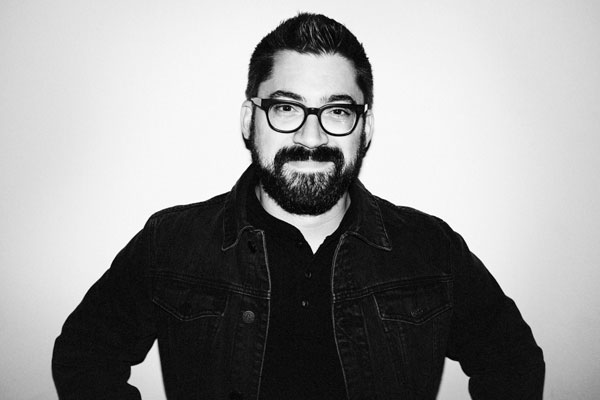


Every Friday morning author Austin Kleon sends out a list of 10 things worth sharing — new art, writing, and interesting links.  I love Kleon's books and his worldview which carries over to his weekly list.


Put together by a team of three, Recommendo is a weekly newsletter that gives you 6 brief personal recommendations of cool stuff.  For a limited time, all new sign-ups will receive a free digital book!


Which newsletters or blogs are "idea nets" that you subscribe to?  Let us know in the "Comments" section below!


Don't miss out on any ExhibiTricks posts! It's easy to get updates via email or your favorite news reader. Just click the "Sign up for Free ExhibiTricks Blog Updates" link on the upper right side of the blog.

Paul Orselli writes the posts on ExhibiTricks. Paul likes to combine interesting people, ideas, and materials to make exhibits (and entire museums!) with his company POW! (Paul Orselli Workshop, Inc.) Let's work on a project together!

If you enjoy the blog, you can help keep it free to read and free from ads by supporting ExhibiTricks through our PayPal "Tip Jar"

Sunday, July 28, 2019

Summer 2019 "Beach Books" for Museum/Exhibit/Design People


If you like to read on the beach (or like me, in a cozy air-conditioned house!) here are a few books that museum/exhibit/design folks can enjoy during the slower pace of summer.

The link on every book title leads to a previous ExhibiTricks post or interview (or in the case of "Mission Matters" and "Partnership Power" to awesome YouTube conversations with the authors!)


Happy Reading!


In Gail Anderson's new book, twenty museum leaders each share their institution’s story of transformative change tied to reframing their mission. Anderson’s central tool for the book, the Mission Alignment Framework, helps reference the thinking about missions and the subsequent changes within museums as they redirect their work.

[Purchase the book here.]


In her highly-readable book, Marsha Semmel includes perspectives from a broad array of institutions, including libraries and other nonprofits; current museum case studies from a broad and diverse spectrum of museum types (history, children’s, art, science, and ethnic); and proven tools, tips, and resources.  Partnership Power: Essential Museum Strategies for Today’s Networked World serves as an invaluable primer for museums – and museum professionals -- wanting to create and sustain effective partnerships and collaborations.

[Purchase the book here.]


"Steal Like An Artist” by Austin Kleon 

Some books just leap out at you and make you read them. "Steal Like An Artist" by Austin Kleon has been one of those kinds of books for me --- packed with ideas, quotes, and anecdotes that really resonate with me and my creative practice.

[Purchase the book here.]


Inside this pithy volume, Weinschenk gives 100 examples of the psychology of design and why some design choices work better than others.

Dividing her 100 examples into thematic sections such as "How People See" and "How People Remember" the author not only provides illustrated examples of design approaches but provides links to research, websites, and online talks that let you explore specific design topics in more depth.

[Purchase the book here.]  


"Of course, there's a more personal reason I started the Museum 2.0 blog. I'm a free choice learner. I didn't want to go to graduate school, but I did want to pursue my own education in museums and learn enough to have something to say to some of the really smart people I was meeting at conferences. The blog really started as a personal learning device. It continues to be that for me, but now there are more co-learners involved."

[Purchase the books here and here. You can also read the books online here and here.]


In Margaret Kadoyama’s vision, cultural organizations are vital members of their communities and are actively involved in community revitalization.  Margaret works collaboratively with museums and cultural organizations to create strategic community involvement and audience development plans, assess programs, and plan for sustainability.

[Purchase the book here.]


"The first edition of Exhibit Labels was a follow-up on my book published by the Association for State and Local History (AASLH) called “Making Exhibit Labels: A Step-by-Step Approach.” I wrote that in 1983 before I’d ever done much work on exhibition planning and design, although I had a background in museum education.

I had a master’s degree in science teaching in non-school settings, and I’d worked as the curator of education at the Shedd Aquarium for eight years. I was in charge of programs, not exhibits. I kept pushing for more interpretive stories in the labels of the Shedd’s galleries, but that wasn’t my job."

[Purchase the book here.]


"Fostering Active Prolonged Engagement" is a book about an NSF-funded project at the Exploratorium that digs deeply into how exhibit components can foster "APE behavior." (APE is the acronym for Active Prolonged Engagement.)  Namely, how can exhibits be developed (or in many cases, re-designed) to allow visitors to take active roles in creating their own experiences in ways that compel them to spend longer periods of time at the exhibits?

[Purchase the book here.]


Don't miss out on any ExhibiTricks posts! It's easy to get updates via email or your favorite news reader. Just click the "Sign up for Free ExhibiTricks Blog Updates" link on the upper right side of the blog.

Paul Orselli writes the posts on ExhibiTricks. Paul likes to combine interesting people, ideas, and materials to make exhibits (and entire museums!) with his company POW! (Paul Orselli Workshop, Inc.) Let's work on a project together!

If you enjoy the blog, please help support ExhibiTricks through our PayPal "Tip Jar"

Tuesday, September 18, 2018

Which Books Would You Recommend to An Emerging Museum Professional?

A colleague recently emailed me to ask about book suggestions for a newcomer to the museum field.

After I sent off the list, it occurred to me that not only did I find all of the books on the list excellent references, but that I had also written blog posts about each one!

So please find below a list of books that I would recommend to any museum professional (emerging or veteran!) If you click the title of the book, it will bring you to the related ExhibiTricks post or interview, and there is a link to purchase each book after the accompanying short descriptive blurb. 

Happy reading!

RECOMMENDED BOOKS FOR MUSEUM PROFESSIONALS


"Steal Like An Artist” by Austin Kleon 

Some books just leap out at you and make you read them. "Steal Like An Artist" by Austin Kleon has been one of those kinds of books for me --- packed with ideas, quotes, and anecdotes that really resonate with me and my creative practice.

[Purchase the book here.]


Inside this pithy volume, Weinschenk gives 100 examples of the psychology of design and why some design choices work better than others.

Dividing her 100 examples into thematic sections such as "How People See" and "How People Remember" the author not only provides illustrated examples of design approaches but provides links to research, websites, and online talks that let you explore specific design topics in more depth.

[Purchase the book here.]  


The "Creating Exhibitions" book is a "must buy" for any museum professional involved in designing or developing exhibits.

[Purchase the book here.]


"Of course, there's a more personal reason I started the Museum 2.0 blog. I'm a free choice learner. I didn't want to go to graduate school, but I did want to pursue my own education in museums and learn enough to have something to say to some of the really smart people I was meeting at conferences. The blog really started as a personal learning device. It continues to be that for me, but now there are more co-learners involved."

[Purchase the books here and here. You can also read the books online here and here.]


In Margaret Kadoyama’s vision, cultural organizations are vital members of their communities and are actively involved in community revitalization.  Margaret works collaboratively with museums and cultural organizations to create strategic community involvement and audience development plans, assess programs, and plan for sustainability.

[Purchase the book here.]


"The first edition of Exhibit Labels was a follow-up on my book published by the Association for State and Local History (AASLH) called “Making Exhibit Labels: A Step-by-Step Approach.” I wrote that in 1983, before I’d ever done much work on exhibition planning and design, although I had a background in museum education.

I had a master’s degree in science teaching in non-school settings, and I’d worked as the curator of education at the Shedd Aquarium for eight years. I was in charge of programs, not exhibits. I kept pushing for more interpretive stories in the labels of the Shedd’s galleries, but that wasn’t my job."

[Purchase the book here.]


"Fostering Active Prolonged Engagement" is a book about an NSF-funded project at the Exploratorium that digs deeply into how exhibit components can foster "APE behavior." (APE is the acronym for Active Prolonged Engagement.)  Namely, how can exhibits be developed (or in many cases, re-designed) to allow visitors to take active roles in creating their own experiences in ways that compel them to spend longer periods of time at the exhibits?

[Purchase the book here.]


Don't miss out on any ExhibiTricks posts! It's easy to get updates via email or your favorite news reader. Just click the "Sign up for Free ExhibiTricks Blog Updates" link on the upper right side of the blog.

P.S. If you receive ExhibiTricks via email (or Facebook or LinkedIn) you will need to click HERE to go to the main ExhibiTricks page to make comments or view multimedia features (like videos!)

Monday, July 31, 2017

What Interesting Museum/Exhibit/Design Things Did You See This Summer?


I'm on the road in Michigan (seeing interesting things, of course) with my family this week, so I thought I'd share an encore version of the post below about museums being more interesting. What interesting museum/exhibit/design things did you see on your summer trips? Let us know in the "Comments" section after this post!

The title of this post is inspired by some ideas from Austin Kleon (his newsletter is really worth subscribing to, and Kleon's book "Steal Like An Artist" is a great read ...) where he relates several (possibly apocryphal) tales of writing teachers giving similar tough, but straightforward, advice to their students who want to become more interesting writers.


"Have you tried making yourself a more interesting person?" 


The upshot of Kleon's musings boil down to the idea that if you want to be interesting, you have to be interested.

I started triangulating this notion of becoming a more interesting person with possible ways of creating more interesting museums, based on my love (and previous blog posts: herehere, and here) of "Museums Worth A Special Trip."

How can museums not currently worth a special trip become more interesting?  Let me immediately suggest two overused approaches that many museum folks try that quite often lead to less interesting museums:

1) Equating bigger with better   Of all the blunt force approaches to becoming a more interesting museum, nothing beats a large building (or building expansion) project.  Here's a news flash --- most museums should be improving their existing programs, exhibits, and facilities, not becoming bigger.

2) Adopting "best practices"  Best practices for who?  Best practices for where?  I'd argue that every museum should develop practices that are unique to their location and the communities they serve.  Why try to apply a "one size fits all" approach?


When I think about museums that I (and many other people!) find truly interesting, places like The City Museum in St. LouisThe Discovery Museums in Acton, MA, or the Children's Museum of Pittsburgh  the staff in these places seem to share a resistance to growth for growth's sake, or merely adopting someone else's notion of "best" practice, and instead have an insatiable desire to try new stuff, to experiment, and, most importantly, to quickly iterate through the physical manifestations of their ideas and to trust that their visitors will respond to their efforts --- even their failures.

Maybe another way to develop more interesting museums is to get things WRONG the first time!  To really push for ideas and interests that aren't completely tested and "safe" in every instance.


My wish is that you can discover something(s) in your own institution to become really interested in, so you can create an even more interesting museum for yourself and your visitors.

Onward!


Don't miss out on any ExhibiTricks posts! It's easy to get updates via email or your favorite news reader. Just click the "Sign up for Free ExhibiTricks Blog Updates" link on the upper right side of the blog.

P.S. If you receive ExhibiTricks via email (or Facebook or LinkedIn) you will need to click HERE to go to the main ExhibiTricks page to make comments or view multimedia features (like videos!)

Wednesday, May 18, 2016

Have you tried making your museum a more interesting place?


The title of this post is inspired by some ideas from Austin Kleon (his newsletter is really worth subscribing to, and Kleon's book "Steal Like An Artist" is a great read ...) where he relates several (possibly apocryphal) tales of writing teachers giving similar tough, but straightforward, advice to their students who want to become more interesting writers.


"Have you tried making yourself a more interesting person?" 


The upshot of Kleon's musings boil down to the idea that if you want to be interesting, you have to be interested.

I started triangulating this notion of becoming a more interesting person with possible ways of creating more interesting museums, based on my love (and previous blog posts: here, here, and here) of "Museums Worth A Special Trip."

How can museums not currently worth a special trip become more interesting?  Let me immediately suggest two overused approaches that many museum folks try that quite often lead to less interesting museums:

1) Equating bigger with better   Of all the blunt force approaches to becoming a more interesting museum, nothing beats a large building (or building expansion) project.  Here's a news flash --- most museums should be improving their existing programs, exhibits, and facilities, not becoming bigger.

2) Adopting "best practices"  Best practices for who?  Best practices for where?  I'd argue that every museum should develop practices that are unique to their location and the communities they serve.  Why try to apply a "one size fits all" approach?


When I think about museums that I (and many other people!) find truly interesting, places like The City Museum in St. Louis, The Discovery Museums in Acton, MA, or the Children's Museum of Pittsburgh  the staff in these places seem to share a resistance to growth for growth's sake, or merely adopting someone else's notion of "best" practice, and instead have an insatiable desire to try new stuff, to experiment, and, most importantly, to quickly iterate through the physical manifestations of their ideas and to trust that their visitors will respond to their efforts --- even their failures.

Maybe another way to develop more interesting museums is to get things WRONG the first time!  To really push for ideas and interests that aren't completely tested and "safe" in every instance.


My wish is that you can discover something(s) in your own institution to become really interested in, so you can create an even more interesting museum for yourself and your visitors.

Onward!


Don't miss out on any ExhibiTricks posts! It's easy to get updates via email or your favorite news reader. Just click the "Sign up for Free ExhibiTricks Blog Updates" link on the upper right side of the blog.

P.S. If you receive ExhibiTricks via email (or Facebook or LinkedIn) you will need to click HERE to go to the main ExhibiTricks page to make comments or view multimedia features (like videos!)

Sunday, November 24, 2013

Steal Like An Artist


Some books just leap out at you and make you read them. 

"Steal Like An Artist" by Austin Kleon has been one of those kind of books for me --- packed with ideas, quotes, and anecdotes that really resonate with me and my creative practice.

Rather than giving the whole book away in this blog post (which would really feel like stealing) I'll share one idea, one quote, and one way of working that will give you a sense of what author Kleon is up to.

The idea "Don't wait until you know who you are to get started" is one that appeals to me very much. There's a tiny "kick in the butt" inside that idea:  "You're ready! Just start making stuff!"  But there's also something inherent in that idea that as both a parent and a teacher is appealing to me too:  "It's ok if you're young and don't have it all figured out, you can still make/do cool stuff." 

How about this quote from Jack White: "Telling yourself you have all the time in the world, all the money in the world, all the colors in the palette, anything you want --- that just kills creativity." As Austin Kleon, points out, the right constraints can lead to your very best work.  Embrace and work within those boundaries and see what you can make happen.

One of the ten axioms about creative work in Steal Like An Artist is: Be boring. (It's the only way to get work done.) Kleon shares several anecdotes in this section of the book about how regular habits and taking care of yourself (and the people around you) give you the mental and physical fuel to fire up your creative work.  (There's a reason Patti Smith tells young artists that its important to go to the dentist!)

So grab a copy of Steal Like An Artist (It's probably best to buy it at Amazon or your local bookshop, than actually stealing it!)  I think you'll find lots of good stuff inside to drive your own creative practice forward.

   
Don't miss out on any ExhibiTricks posts! It's easy to get updates via email or your favorite news reader. Just click the "Sign up for Free ExhibiTricks Blog Updates" link on the upper right side of the blog.

P.S. If you receive ExhibiTricks via email (or Facebook or LinkedIn) you will need to click HERE to go to the main ExhibiTricks page to make comments or view multimedia features (like videos!)