Showing posts with label design inspiration. Show all posts

Tuesday, December 3, 2024

Design Inspiration -- The Alternative Limb Project


I had previously thought about prosthetics as primarily functional objects until I learned about the Alternative Limb Project. 

Founded by Sophie de Oliveira Barata, the Alternative Limb Project uses prosthetics to create wearable art pieces, which you can see on their website.


Working with specialists from various fields, the Project creates prosthetics that bridge art, fashion, technology, and engineering.


Check out the Alternative Limb Project website for more details and images.  The website says they are always on the lookout for "future collaborators and ways of engaging new audiences."

Seems like a perfect opportunity for museums!


Don't miss out on any ExhibiTricks posts! It's easy to get updates via email or your favorite news reader. Just click the "Sign up for Free ExhibiTricks Blog Updates" link on the upper right side of the blog.

Paul Orselli writes the posts on ExhibiTricks. Paul likes to combine interesting people, ideas, and materials to make exhibits (and entire museums!) with his company POW! (Paul Orselli Workshop, Inc.) Let's work on a project together!

If you enjoy the blog, you can help keep it free to read and free from ads by supporting ExhibiTricks through our PayPal "Tip Jar"

Monday, September 2, 2024

Museum/Exhibit/Design Inspiration: Disney Research


Many museum folks dislike Disney and its theme parks. But even if you're not a Disney fan, it's worth checking out what the Disney Research folks (and their research partners) are up to.

On the Disney Research website, they present research papers and show videos of some of their cool concepts like "Stuntronics" (which uses robotic technology to produce stunt-double animatronics)  or "Magic Bench" (pictured below) which introduces "mixed reality" experiences and characters into an environment without headsets. 


The Disney Research website offers dozens of inspirational ideas (including, in many cases, information about materials used) that can really push you to consider new technological possibilities for your projects -- even if you have to adapt them to museum-sized budgets! (Paper Electric Generators, anyone?)


For more information, visit the Disney Research website and check out the DisneyResearchHub on YouTube as well. 


Don't miss out on any ExhibiTricks posts! It's easy to get updates via email or your favorite news reader. Just click the "Sign up for Free ExhibiTricks Blog Updates" link on the upper right side of the blog.

Paul Orselli writes the posts on ExhibiTricks. Paul likes to combine interesting people, ideas, and materials to make exhibits (and entire museums!) with his company POW! (Paul Orselli Workshop, Inc.) Let's work on a project together!

If you enjoy the blog, you can help keep it free to read and free from ads by supporting ExhibiTricks through our PayPal "Tip Jar"

Wednesday, January 25, 2023

Design Inspiration: Scan of the Month


"Scan of the Month" is a cool website that shows CT scans of everyday objects (like the asthma inhaler at the top of this post) with fascinating results.

The website started off as some scans of LEGO Minifigures created by a group of creative technologists at the engineering company Lumafield.  

To quote the website:  "Engineering marvels surround us every day. As deeply curious engineers, we thought we understood how beautiful the details around us can be. Then CT scanning revealed a world we had never seen."

So click on over to the Scan of the Month website to reveal a new bit of the world.


Don't miss out on any ExhibiTricks posts! It's easy to get updates via email or your favorite news reader. Just click the "Sign up for Free ExhibiTricks Blog Updates" link on the upper right side of the blog.

Paul Orselli writes the posts on ExhibiTricks. Paul likes to combine interesting people, ideas, and materials to make exhibits (and entire museums!) with his company POW! (Paul Orselli Workshop, Inc.) Let's work on a project together!

If you enjoy the blog, you can help keep it free to read and free from ads by supporting ExhibiTricks through our PayPal "Tip Jar"

Wednesday, August 10, 2022

Design Inspiration -- Life Stats


Time is a topic that many types of museums touch on.

The Web-based app called Life Stats was developed by creative coder Neal Agarwal to graphically show things that have happened since the day you were born.

Life Stats ranges from very personal things (How many breaths have you taken?  What's the total amount of time you have been asleep?) to very universal and global things (How many times have you orbited the Sun? How much has the world literacy rate increased?)


This approach could be a fun addition to exhibitions or programming centered around the human body or topics related to space and time.

Click over to Life Stats and other interesting projects from Neal Agarwal to find out more!


Don't miss out on any ExhibiTricks posts! It's easy to get updates via email or your favorite news reader. Just click the "Sign up for Free ExhibiTricks Blog Updates" link on the upper right side of the blog.

Paul Orselli writes the posts on ExhibiTricks. Paul likes to combine interesting people, ideas, and materials to make exhibits (and entire museums!) with his company POW! (Paul Orselli Workshop, Inc.) Let's work on a project together!

If you enjoy the blog, you can help keep it free to read and free from ads by supporting ExhibiTricks through our PayPal "Tip Jar"

Tuesday, July 12, 2022

Museum/Exhibit/Design Inspiration: Water + Video?


I'm working on some water exhibits now and I'm pondering ways to let visitors play with water and video systems to create and capture images like the one at the top of this post.  (Check out this short YouTube video for more cool images ... )  

Of course, the pioneering strobe photography work of "Doc" Edgerton at MIT created iconic images like the milk drop corona below, but these images were often the result of painstaking laboratory set-ups and equipment, not something for visitors to play with and manipulate.


Aside from the classic "Stop the Drop" or "Double Piddler" exhibits where visitors can control a strobe system pointed at streams of water, what other open-ended exhibit opportunities have you seen or experienced combining video (or other imaging techniques) and water (or other fluids)?  

Share your ideas in the Comments section below!


Don't miss out on any ExhibiTricks posts! It's easy to get updates via email or your favorite news reader. Just click the "Sign up for Free ExhibiTricks Blog Updates" link on the upper right side of the blog.

Paul Orselli writes the posts on ExhibiTricks. Paul likes to combine interesting people, ideas, and materials to make exhibits (and entire museums!) with his company POW! (Paul Orselli Workshop, Inc.) Let's work on a project together!

If you enjoy the blog, you can help keep it free to read and free from ads by supporting ExhibiTricks through our PayPal "Tip Jar"

Wednesday, December 15, 2021

2021 in the Rearview


I don't know about you, but I'm happy to put 2021 in the rearview mirror.  Yet, despite the many challenges that came over the past 12 months, some recurring positive aspects of my work and professional practice continued to poke through the gloom.

Here are some good things I'll be carrying with me and considering some more in 2022.  (Each title link below brings you to a related 2021 ExhibiTricks post.)


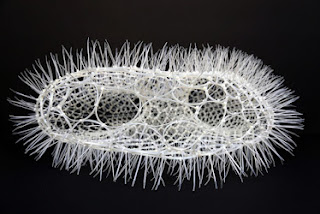
I always enjoy being inspired by and sharing the work of creative folks.  I especially enjoyed the wonderful cable tie sculptures made by Sui Park.


Taking a little time to prototype and test ideas is such an important part of making great exhibits, but so often overlooked or "rationalized" away.  Make a New Year's resolution to use more TAPE!


Some museums have it, and some don't.  What can you do in 2022 to imbue your work, and the places where you work, with authentic museum spirit?


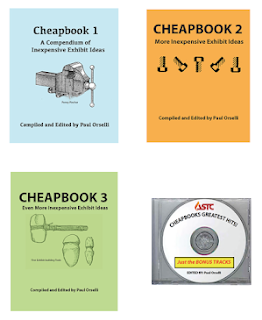
I think one of the major strengths of museum workers is their willingness to share -- their ideas, their time, their hard-won lessons learned. So I was delighted this year to work with ASTC to release all four volumes of the Exhibit Cheapbooks out into the wild for FREE! (Of course, you can always check out the "Free Exhibit Resources" section of the POW! website for articles, videos, and other cool stuff!)


Here's wishing ExhibiTricks readers and subscribers a happy, healthy, and prosperous 2022!


Don't miss out on any ExhibiTricks posts! It's easy to get updates via email or your favorite news reader. Just click the "Sign up for Free ExhibiTricks Blog Updates" link on the upper right side of the blog.

Paul Orselli writes the posts on ExhibiTricks. Paul likes to combine interesting people, ideas, and materials to make exhibits (and entire museums!) with his company POW! (Paul Orselli Workshop, Inc.) Let's work on a project together!

If you enjoy the blog, you can help keep it free to read and free from ads by supporting ExhibiTricks through our PayPal "Tip Jar"

Monday, September 13, 2021

Decisions, Decisions! Problem-Solving Tools for Designers


The "design process" is often a "decision-making process."

And often the key to decision-making success comes through using the proper tools.

That's where the Untools website comes in.  Untools is a collection of thinking tools to help you solve problems, make decisions, and understand systems.

The Untools folks have collected (and continually add to) different types of decision-making ideas and frameworks that you can try out right away and use to kick-start your design thinking.

I especially liked the Prompt Questions section of the Untools website that helps you choose the right thinking tool(s) for your particular purpose(s).


Why not decide to click on over to the Untools website right now?


Don't miss out on any ExhibiTricks posts! It's easy to get updates via email or your favorite news reader. Just click the "Sign up for Free ExhibiTricks Blog Updates" link on the upper right side of the blog.

Paul Orselli writes the posts on ExhibiTricks. Paul likes to combine interesting people, ideas, and materials to make exhibits (and entire museums!) with his company POW! (Paul Orselli Workshop, Inc.) Let's work on a project together!

If you enjoy the blog, you can help keep it free to read and free from ads by supporting ExhibiTricks through our PayPal "Tip Jar"

Tuesday, August 10, 2021

Design Inspiration: Sui Park's Cable Tie Creations


One of my favorite definitions of creativity is "using familiar things in unfamiliar ways."  By that criteria, Sui Park is truly creative.


Sui Park is a New York-based artist born in Seoul, Korea. Her work involves creating 3-dimensional biomorphic shapes out of industrial materials like cable ties.


What kinds of familiar materials or ideas could you use in unfamiliar ways?  

Click on over to Sui Park's website to see more of her work and gather some creative design inspiration.


Don't miss out on any ExhibiTricks posts! It's easy to get updates via email or your favorite news reader. Just click the "Sign up for Free ExhibiTricks Blog Updates" link on the upper right side of the blog.

Paul Orselli writes the posts on ExhibiTricks. Paul likes to combine interesting people, ideas, and materials to make exhibits (and entire museums!) with his company POW! (Paul Orselli Workshop, Inc.) Let's work on a project together!

If you enjoy the blog, you can help keep it free to read and free from ads by supporting ExhibiTricks through our PayPal "Tip Jar"

Monday, July 19, 2021

Design Inspiration: Mariko Kusumoto


Mariko Kusumoto was born in Japan where she studied art before continuing her education in San Francisco. Today, from her Lexington, Massachusetts studio, Kusumoto combines a love of the ocean, creative shapes, and found objects to create their work.


I'm especially inspired by the combinations of materials that Kusumoto uses to evoke oceanic plants and animals.


To find out more about the range of Mariko Kusumoto's work, click on over to her website or Instagram account.


Don't miss out on any ExhibiTricks posts! It's easy to get updates via email or your favorite news reader. Just click the "Sign up for Free ExhibiTricks Blog Updates" link on the upper right side of the blog.

Paul Orselli writes the posts on ExhibiTricks. Paul likes to combine interesting people, ideas, and materials to make exhibits (and entire museums!) with his company POW! (Paul Orselli Workshop, Inc.) Let's work on a project together!

If you enjoy the blog, you can help keep it free to read and free from ads by supporting ExhibiTricks through our PayPal "Tip Jar"

Sunday, March 7, 2021

Exhibit Design Inspiration: Tim Hunkin's Secret Life of Components


The brilliant artist and gizmologist Tim Hunkin has done it again! 

Tim has created A series of YouTube guides for designers and makers entitled the "Secret Life of Components."  The subjects of the eight episodes are Chain, Switches, LEDs, Springs, Connectors, Hinges, and Glue. The eight videos will be released on a weekly schedule starting on March 4, 2021.

You can find out more about the genesis of the Secret Life of Components series as well as Tim's other amazing work by clicking over to his website.

You can also check out the first episode (about Chain) by viewing the embedded video below or by heading directly to Tim Hunkin's YouTube page.

Enjoy!


Don't miss out on any ExhibiTricks posts! It's easy to get updates via email or your favorite news reader. Just click the "Sign up for Free ExhibiTricks Blog Updates" link on the upper right side of the blog.

Paul Orselli writes the posts on ExhibiTricks. Paul likes to combine interesting people, ideas, and materials to make exhibits (and entire museums!) with his company POW! (Paul Orselli Workshop, Inc.) Let's work on a project together!

If you enjoy the blog, you can help keep it free to read and free from ads by supporting ExhibiTricks through our PayPal "Tip Jar"

Wednesday, December 16, 2020

Revisiting 10 Principles of Good Design


The work of industrial designer Dieter Rams deftly spans both the 20th and 21st centuries. (You can see his influence on designers like Jony Ive at Apple, for example.) 

I've kept bumping into articles and books (like the excellent As Little Design As Possible) about Rams recently, so I thought I'd revisit his 10 Principles of Good Design below.  The 10 Principles certainly are an excellent reference as we think about design work in museum (and non-museum!) settings.


Dieter Rams Ten Principles of “Good Design”


Good Design Is Innovative: The possibilities for innovation are not, by any means, exhausted. Technological development is always offering new opportunities for innovative design. But innovative design always develops in tandem with innovative technology, and can never be an end in itself.

Good Design Makes a Product Useful: A product is bought to be used. It has to satisfy certain criteria, not only functional but also psychological and aesthetic. Good design emphasizes the usefulness of a product while disregarding anything that could possibly detract from it.

Good Design Is Aesthetic: The aesthetic quality of a product is integral to its usefulness because products are used every day and have an effect on people and their well-being. Only well-executed objects can be beautiful. 

Good Design Makes A Product Understandable: It clarifies the product’s structure. Better still, it can make the product clearly express its function by making use of the user’s intuition. At best, it is self-explanatory. 

Good Design Is Unobtrusive: Products fulfilling a purpose are like tools. They are neither decorative objects nor works of art. Their design should therefore be both neutral and restrained, to leave room for the user’s self-expression.

Good Design Is Honest: It does not make a product more innovative, powerful or valuable than it really is. It does not attempt to manipulate the consumer with promises that cannot be kept

Good Design Is Long-lasting: It avoids being fashionable and therefore never appears antiquated. Unlike fashionable design, it lasts many years – even in today’s throwaway society.

Good Design Is Thorough Down to the Last Detail: Nothing must be arbitrary or left to chance. Care and accuracy in the design process show respect towards the consumer.

Good Design Is Environmentally Friendly: Design makes an important contribution to the preservation of the environment. It conserves resources and minimizes physical and visual pollution throughout the lifecycle of the product.

Good Design Is as Little Design as Possible: Less, but better – because it concentrates on the essential aspects, and the products are not burdened with non-essentials. Back to purity, back to simplicity.


Don't miss out on any ExhibiTricks posts! It's easy to get updates via email or your favorite news reader. Just click the "Sign up for Free ExhibiTricks Blog Updates" link on the upper right side of the blog.

Paul Orselli writes the posts on ExhibiTricks. Paul likes to combine interesting people, ideas, and materials to make exhibits (and entire museums!) with his company POW! (Paul Orselli Workshop, Inc.) Let's work on a project together!

If you enjoy the blog, you can help keep it free to read and free from ads by supporting ExhibiTricks through our PayPal "Tip Jar"

Sunday, December 6, 2020

Design Site Rabbithole: Impeccable IP


Who knew that seeing the latest design patent images could be so compelling?

I suspect patent attorney Elizabeth R. Kendall did when she set up the website Impeccable IP.


Impeccable IP provides a slideshow of all the designs that were granted patents during the past week -- and an archive of design patent images from recent weeks and years as well.

When you click on an image, a PDF of the actual patent application pops up.


That's it. That's Impeccable IP. You should check it out.

There's a lot to glean from those design patent images -- future design trends, current fads, maybe even exhibit ideas?


Don't miss out on any ExhibiTricks posts! It's easy to get updates via email or your favorite news reader. Just click the "Sign up for Free ExhibiTricks Blog Updates" link on the upper right side of the blog.

Paul Orselli writes the posts on ExhibiTricks. Paul likes to combine interesting people, ideas, and materials to make exhibits (and entire museums!) with his company POW! (Paul Orselli Workshop, Inc.) Let's work on a project together!

If you enjoy the blog, you can help keep it free to read and free from ads by supporting ExhibiTricks through our PayPal "Tip Jar"

Friday, May 1, 2020

"Feets-On" Museums?


Let me start out by saying I wasn't raised by wolves, so I know that "feets" is a word that doesn't technically exist in the English language, but I'm making a comparison to the oft-used term "Hands-On" and the terms "Feet-On" or "Shoes-On" didn't quite hit the mark.

Many people in the interactive areas of the museum business are justifiably concerned about visitors' reluctance to touch things when museums begin to reopen after the COVID-19 pandemic. Me too!

I was recently interviewed for the excellent Museum Archipelago podcast to discuss the future of hands-on museum exhibits, and afterward, it got me thinking about how many interesting exhibits I've seen people use or activate with their feet. "Feets-On" seems like a much better design-thinking experiment than the idea of an entirely "touch-free" museum, and I don't recall anyone ever being concerned about poking or touching something with their shoe-clad foot inside an exhibition gallery.

Bear with me here -- I don't expect to create an entirely "Feets-On" Museum (although it seems like a cool idea!) but I'm using the notion as a jumping-off point, some design inspiration. What other interesting interfaces could we use to retrofit old exhibit components, or create brand new exhibit experiences, that would be respectful of visitors' concerns after months of being told to physically distance themselves from others and to avoid touching anything?

So here's a walkthrough of some inspiring foot-activated or foot-integrated experiences to keep you on your toes! (Most, if not all, of these experiences could be activated by people using wheelchairs or walkers, too.)


Switch Mats
These industrial-strength mats respond to just a slight bit of pressure and could be a way to replace simple push-button activated exhibits.


Earthquake/Seismograph Jumps
A classic bit of Science Center exhibit interaction -- jump to see a seismograph register and create your own mini-earthquake!  It's a cool way to combine a real scientific instrument with pure fun.  (Muzeiko in Bulgaria also has a jump-activated volcano model!)


Walk-on Big Piano
If you've ever seen the 1988 movie, "Big" with Tom Hanks, you no doubt remember the scene of Hanks' character dancing on a giant piano keyboard.  A fun way to create music without your hands! Check out the aptly-named company, Big Piano, for more information on how to purchase your own Big Piano.


Floor Projections
There are a number of companies that create interactive floor projections -- everything from dinosaur digs to alphabet hopscotch.  Here's an image from the fine folks at LUMOplay of one of their dino dig experiences.


Stomp Rockets and Cars
"Stomp" exhibits can be designed to meet an important interactive exhibit design feature -- the automatic reset!  Here's a picture of a stomp car track from the Palouse Discovery Center.  Note how the racetrack is tilted upward so the cars automatically roll back to the starting line.


Balance Exhibits
Many sports exhibitions have a number of experiences that let visitors "think on their feet." Here's an example of an equilibrium test from Children's Museum Houston, but I've also seen surfboard and balance beam exhibit components, too.


"Shoe View"
A great idea I've seen in several exhibitions is a kiosk with a monitor at eye level but a camera at the foot/shoe level.  It immediately catches your attention because you expect the screen to show your face or upper torso, not your shoes.  This worked to great effect in the "Global Shoes" exhibition developed by the Brooklyn Children's Museum and Whirlwind Creative.  In this case, you were encouraged to look carefully at your own shoes and compare them to the many different types of shoes on display in the exhibition.


Footprint and Shoe Comparisons
People love to compare themselves to other people and animals.  Presenting visitors with a way to compare their own feet to a dinosaur, or an elephant, or a famous athlete makes for a great selfie moment!


Math Dance 
Even Math can become an opportunity to use your feet when you are working with a talented dancer like Mickela Mallozi (of the "Bare Feet" TV show from PBS.)  Mickela helped us develop a "Math Dance" interactive for the Discovery Museum in Acton, Massachusetts that lets visitors dance along to find the geometry and patterns in dances from around the world!


I hope you've enjoyed this little walkabout through some "feets-on" design inspiration.

Let's all point our shoes in the right direction and start marching toward new interactive exhibit design ideas for when we all finally step into our favorite museums as they begin to reopen around the world!


Don't miss out on any ExhibiTricks posts! It's easy to get updates via email or your favorite news reader. Just click the "Sign up for Free ExhibiTricks Blog Updates" link on the upper right side of the blog.

Paul Orselli writes the posts on ExhibiTricks. Paul likes to combine interesting people, ideas, and materials to make exhibits (and entire museums!) with his company POW! (Paul Orselli Workshop, Inc.) Let's work on a project together!

If you enjoy the blog, you can help keep it free to read and free from ads by supporting ExhibiTricks through our PayPal "Tip Jar"

Thursday, October 10, 2019

Designer's Watch List -- "Abstract: The Art of Design" on Netflix


Netflix recently launched the second season of its documentary series about designers and design called Abstract: The Art of Design.

I think it's a must-watch show for designers and non-designers alike.  Each episode features a deep dive into a particular designer's process and personal background that gives a strong sense of what drives that person and their design practice.

Each episode of Abstract is a self-contained mini-documentary that reflects the personality and approach of each designer (ranging from costume designers to typographers to toymakers) so every show has its own unique flavor.

I especially liked the shows from the current season that featured toy designer Cas Holman and one of my favorite modern artists, Olafur Eliasson.  Highly recommended!

You can view the Season 2 trailer of Abstract below or on YouTube.


Don't miss out on any ExhibiTricks posts! It's easy to get updates via email or your favorite news reader. Just click the "Sign up for Free ExhibiTricks Blog Updates" link on the upper right side of the blog.

Paul Orselli writes the posts on ExhibiTricks. Paul likes to combine interesting people, ideas, and materials to make exhibits (and entire museums!) with his company POW! (Paul Orselli Workshop, Inc.) Let's work on a project together!

If you enjoy the blog, please help support ExhibiTricks through our PayPal "Tip Jar"

Tuesday, June 5, 2018

Design Inspiration: Origami Organelles!


"Origami Organelles" seems like an oxymoron, but company founders Dominic and Melanie Delaney thought otherwise.

The two former research scientists combined their love of science with the ancient paper art of origami to create a fun way to help people better understand science concepts. 

After clicking over to the Origami Organelles website, you can purchase and download printable files which you can then cut out and assemble to better understand the structure and functions of everything from teeth to eyeballs to alcohol molecules (images of some of the finished models are pictured in this post.)


There's something nice about this tactile, making aspect of learning science that I'm sure helps Origami Organelle users really internalize the science concepts featured in the paper models.

Once you pay for a model (or a discounted bundle of models) you can print out as many as you want, so even a cash-strapped classroom teacher or museum educator can find some great inexpensive additions to a science (or maker!) program.

Check out the Origami Organelle website or Facebook page for more info.


Water Cycle Paper Model from Origami Organelles


Don't miss out on any ExhibiTricks posts! It's easy to get updates via email or your favorite news reader. Just click the "Sign up for Free ExhibiTricks Blog Updates" link on the upper right side of the blog.

P.S. If you receive ExhibiTricks via email (or Facebook or LinkedIn) you will need to click HERE to go to the main ExhibiTricks page to make comments or view multimedia features (like videos!)

Friday, March 23, 2018

Exhibit Design Inspiration: Brad's Grocery Store Vegetable Displays


You have to admire someone who takes a "simple" job and turns it into a creative outlet.  Such is the case with Brad, a semi-anonymous grocery store worker from the city of Madison in Wisconsin.

I came across Brad's story, and examples of his work, through the food-related offshoot (called "Gastro Obscura") of the website Atlas Obscura.

For Pi Day!
One thing that resonated for me about Brad's vegetable creations was how he took a task that might have seemed mundane or even drudgery and turned it into a positive creative outlet.  I think there's a good inspirational lesson there for any museum/exhibit/design worker!

I also appreciated how positive customer feedback pushed Brad to keep up with his creative vegetable displays.  To quote Brad:

Compared to past jobs, “doing this work was the first time people would stop, smile, and give me nice comments on the beauty of my work.”

So as you move through your own creative tasks and challenges, take some time to find the beauty in your own endeavors.

Check out the Gastro Obscura article about Brad, and follow him on Instagram to see even more examples of his vegetable artistry.


Don't miss out on any ExhibiTricks posts! It's easy to get updates via email or your favorite news reader. Just click the "Sign up for Free ExhibiTricks Blog Updates" link on the upper right side of the blog.

P.S. If you receive ExhibiTricks via email (or Facebook or LinkedIn) you will need to click HERE to go to the main ExhibiTricks page to make comments or view multimedia features (like videos!)