Inevitably during remote exhibition installations, a graphic gets left behind, or a missing exhibit piece needs to be shipped to a distant museum site.
Unfortunately, shipping an odd-shaped and/or heavy package quickly (and cheaply!) often turns into an expensive hassle.
Fortunately, one of my museum pals recently made me aware of the online service called Pirate Ship.
You simply go to the Pirate Ship website, enter information about the size and weight of your package, and the website generates a set of options for shipping your package that can save you up to 80% off standard UPS or USPS shipping rates.
You print the shipping label out yourself, and the Pirate Ship service is free and pay-as-you-go, so there are no ongoing costs or subscription charges.
The next time you get caught in an exhibition or installation shipping jam, give Pirate Ship a try!
Don't miss out on any ExhibiTricks posts! It's easy to get updates via email or your favorite news reader. Just click the "Sign up for Free ExhibiTricks Blog Updates" link on the upper right side of the blog.
Paul Orselli writes the posts on ExhibiTricks. Paul likes to combine interesting people, ideas, and materials to make exhibits (and entire museums!) with his company POW! (Paul Orselli Workshop, Inc.) Let's work on a project together!
If you enjoy the blog, you can help keep it free to read and free from ads by supporting ExhibiTricks through our PayPal "Tip Jar"
Even if you are not a graphic designer, you probably need to occasionally "tweak" images for your work -- tasks like simply removing backgrounds or removing individual objects from photos.
Cleanup.pictures is an intuitive online tool that lets you remove objects, people, text, or defects from images.
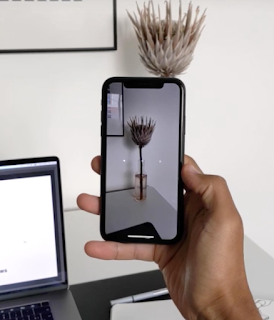
ClipDrop actually uses AR (Augmented Reality) to allow you to accurately remove the backgrounds from photos you take, or existing photos on your device. ClipDrop then lets you drop the clean image directly onto your desktop -- which is super cool!
I hope you enjoy exploring these tools. Which "cool tools" do you use to help your workflow? Let us know in the "Comments" section below!
Don't miss out on any ExhibiTricks posts! It's easy to get updates via email or your favorite news reader. Just click the "Sign up for Free ExhibiTricks Blog Updates" link on the upper right side of the blog.
Paul Orselli writes the posts on ExhibiTricks. Paul likes to combine interesting people, ideas, and materials to make exhibits (and entire museums!) with his company POW! (Paul Orselli Workshop, Inc.) Let's work on a project together!
If you enjoy the blog, you can help keep it free to read and free from ads by supporting ExhibiTricks through our PayPal "Tip Jar"
Have you ever considered creating a way to let visitors explore your hidden collections online or in an exhibit? What about including a dashboard that illustrates your community impact in a grant proposal?
“Data visualization” may sound trendy and flashy, but it’s been around for a very long time – even mastered by Florence Nightingale. And you too are already familiar with it -- pie charts, bar graphs, timelines, and maps are all kinds of data viz.
At its core, data viz is the translation of data into visual characteristics. Take a point in a scatter plot, for example. The color, size, and position of that point can each mean something different. Humans are really good at picking out patterns, and so data viz lets us visually explore, understand, and communicate trends in data in an intuitive way.
CollViz (short for Collection Visualization) is a website created by Jessica Mailhot. She’s braided together her experience in collection management and data viz design for her Master’s thesis
project at the University of Colorado Boulder’s Museum & Field Studies Program. CollViz is where you can find pre-made templates of dashboards designed for museums, tutorials for how to use and customize them, and a host of resources to make data viz easy and powerful. Everything on CollViz is free to use, and the software Tableau Public is free, too.
Museums are full of data. It’s how they manage their collections, measure their impact, carry out projects, and teach science. And while data viz has blossomed in many other spheres, it’s still a relatively new frontier in museums. There is boundless potential, though, especially for engaging with the public. Data viz is intuitive and eye-catching. It’s spread over social media, published in popular magazines, and even reports our progress in health tracking apps.
For museums who may be curious about bringing data viz into their toolbelt, there can be some imposing barriers: training time, IT experience, extra funds, and resources suited for other professions. Now the CollViz website is a place for museums to go to get everything they need to make data viz easy, quick, and relevant.
In these transformative times for museums, we need to seek out new ways to make an impact and create engaging experiences for our communities. CollViz is here to make data viz a robust and accessible option for museums of all kinds and is something you can begin today while working remotely. So click over to the CollViz website, and let’s visualize the future of museums together!
Don't miss out on any ExhibiTricks posts! It's easy to get updates via email or your favorite news reader. Just click the "Sign up for Free ExhibiTricks Blog Updates" link on the upper right side of the blog.
Paul Orselli writes the posts on ExhibiTricks. Paul likes to combine interesting people, ideas, and materials to make exhibits (and entire museums!) with his company POW! (Paul Orselli Workshop, Inc.) Let's work on a project together!
If you enjoy the blog, you can help keep it free to read and free from ads by supporting ExhibiTricks through our PayPal "Tip Jar"
Now that COVID-19 has turned almost every museum worker into a telecommuter, I have an idea for something that could build a resource for colleagues around the world.
Let's use our "work from home" time into creating a set of Museum FAQ videos to share with each other.
A little background -- last year I started a short-video series called Museum FAQ to provide answers to frequently asked questions I often received from clients, peers, and Emerging Museum Professionals (EMPs).
Now that so many of us are working from home wouldn't it be great to create a "reference library" of free videos on museum/exhibit/design questions like, "What makes a great museum label?" or "How can I shift static content into interactive exhibit activities?" or "What's a simple unguided Maker Space activity?" You get the idea.
I'm happy to set up times to plan and record simple Zoom conversations between myself and museum colleagues to create new Museum FAQ videos to share freely on YouTube.
If that sounds like something you'd like to be part of, please email me at info@orselli.net so we can get started!
Don't miss out on any ExhibiTricks posts! It's easy to get updates via email or your favorite news reader. Just click the "Sign up for Free ExhibiTricks Blog Updates" link on the upper right side of the blog.
Paul Orselli writes the posts on ExhibiTricks. Paul likes to combine interesting people, ideas, and materials to make exhibits (and entire museums!) with his company POW! (Paul Orselli Workshop, Inc.) Let's work on a project together!
If you enjoy the blog, you can help keep it free to read and free from ads by supporting ExhibiTricks through our PayPal "Tip Jar"
The Inclusive Historian's Handbook is an online resourceco-sponsored by the American Association for State and Local History (AASLH) and the National Council on Public History (NCPH). It aligns with AASLH’s and NCPH’s goals of building diversity and inclusion across the historical community. From: the IHH Website: "The Handbookis for individuals and groups engaged in historical work in a wide range of settings—not just paid professionals or academic scholars. It is intended to provide community groups, educators, museum professionals (paid and unpaid), students, scholars, activists, historical societies, preservationists, archivists, and others with easy-to-find information that is directly applicable to inclusive history practice. We hope that the content is accessible to all people who are doing historical work, including those who may not identify as historians."
The Handbook is a new resource (introduced in August 2019 at the AASLH Conference in Philadelphia) that will continue to grow -- and that's where YOU come in!
The Inclusive Historian's Handbook is already off to a great start and the broader museum and history communities can help it grow!
Paul Revere House, ca. 1900, showing local children and Filippo Goduti, the proprietor of the cigar company that rented space in the building from 1898-1901. Photo credit: Paul Revere House.
Don't miss out on any ExhibiTricks posts! It's easy to get updates via email or your favorite news reader. Just click the "Sign up for Free ExhibiTricks Blog Updates" link on the upper right side of the blog.
Paul Orselli writes the posts on ExhibiTricks. Paul likes to combine interesting people, ideas, and materials to make exhibits (and entire museums!) with his company POW! (Paul Orselli Workshop, Inc.) Let's work on a project together!
If you enjoy the blog, please help support ExhibiTricks through our PayPal "Tip Jar"
What started out years ago as a project for an ASTC Conference session, has now blossomed into an ever-growing and evolving set of resources organized by categories like "Fake Food", "Hardware", and "Glow-In-The-Dark Stuff". (As a matter of fact, I just added some new entries this week.)
Click on over to The Great Big Exhibit Resource List to explore the possibilities yourself. (If you have suggestions for additions to the list, feel free to drop me an email.)
And while you finding the exhibit supplies of your dreams in The List, also check out the FREE Exhibit Resources page on the POW! Website. There you'll find downloadable articles and resources on donor recognition and other museum/exhibit/design topics covered here on the ExhibiTricks blog.
Don't miss out on any ExhibiTricks posts! It's easy to get updates via email or your favorite news reader. Just click the "Sign up for Free ExhibiTricks Blog Updates" link on the upper right side of the blog.
P.S. If you receive ExhibiTricks via email (or Facebook or LinkedIn) you will need to click HERE to go to the main ExhibiTricks page to make comments or view multimedia features (like videos!)
I've recently fallen down the rabbit hole of Numberphile, a great math-oriented website and related YouTube channel filled with all sorts of clever ideas that should be of interest to educators and exhibit designers alike.
One of the things I like best about the Numberphile videos is that each mathematician is so enthusiastic, you can't help but get excited and interested in things like "circle inversions" that you might not have even given a passing thought to before.
While I've honestly enjoyed every Numberphile presenter I've seen, some are particular standouts.
Tadashi Tokieda often relates his math talks to toys or familiar materials. Here's a video (embedded below or on YouTube) that shows all the fun topological ways to play with a strip of paper, some paper clips, and rubber bands.
Hannah Fry is a funny presenter who often ties the mathematics of game theory to real life situations like winning Rock, Paper, Scissors (video below or on YouTube) or Secret Santa, or making the best online dating profile.
If you are a bit "math shy" or even an avowed mathphobe, click on over to Numberphile! I'm sure you will find something to pique your interest there.
Don't miss out on any ExhibiTricks posts! It's easy to get updates via email or your favorite news reader. Just click the "Sign up for Free ExhibiTricks Blog Updates" link on the upper right side of the blog.
P.S. If you receive ExhibiTricks via email (or Facebook or LinkedIn) you will need to click HERE to go to the main ExhibiTricks page to make comments or view multimedia features (like videos!)
As 2016 draws to a close, I thought I'd offer a quick list of resources for your museum/exhibit/design reading (or holiday gift giving!) list.
Each were featured in posts on ExhibiTricks in 2016, so you can click the links in the list below for the full article and/or more information about downloading or purchasing the resources.
Happy Reading!
The 2016 ExhibiTricks Picks 1) Exhibition JournalIf you are not already a subscriber, you are missing out on the best museum-related journal in the business. Top-notch themes, stories, and design.
2) Sacred and StolenGary Vikan's insider account of his time as Director of the Walters Art Museum. His stories give a funny (and scary!) view of the Art Museum world.
6) Interpretation: Making a Difference on PurposeAuthor Sam Ham brings practical information to museum workers interested in interpretation, but he also shares what research tells us about how people process information. 7) A Practical Guide to Museum EthicsAs the director of the Institute of Museum Ethics at Seton Hall University, Sally Yerkovich brings her expertise to the fore in this interesting and useful book. 8) House of Lost WorldsRichard Conniff puts together an enjoyable history of the Yale Peabody Museum of Natural History. From its unlikely founding 150 years ago, the story is filled with both colorful characters and great moments in science centered around the amazing New Haven institution.
Don't miss out on any ExhibiTricks posts! It's easy to get updates via email or your favorite news reader. Just click the "Sign up for Free ExhibiTricks Blog Updates" link on the upper right side of the blog.
P.S. If you receive ExhibiTricks via email (or Facebook or LinkedIn) you will need to click HERE to go to the main ExhibiTricks page to make comments or view multimedia features (like videos!)
Pinterest is a great visual tool (organized into "boards" of images linked to websites) for museum/exhibit/design folks.
I'd like to gather your recommended Pinterest boards (as well as your Pinterest tips and tricks) for a future ExhibiTricks post (and free downloadable document) that can serve as a Pinterest compendium and resource.
Pinterest can also be a great resource when looking for examples of interesting exhibition designs or ideas. The indefatigable Elaine Gurian has a fantastic Pinterest site called "Museum Educator" that has a number of thematic boards related to topics such as "Museum Architecture" and "Label Ideas."
Another Pinterest favorite is the "Recognition" board which has super examples of donor recognition signage (with a bit of wayfinding, too!)
So click on over to Pinterest for some inspiration, and then tell us about your favorite museum/exhibit/design Pinterest boards, as well as your best Pinterest tips and tricks, in the "Comments" section below.
Don't miss out on any ExhibiTricks posts! It's easy to get updates via email or your favorite news reader. Just click the "Sign up for Free ExhibiTricks Blog Updates" link on the upper right side of the blog.
P.S. If you receive ExhibiTricks via email (or Facebook or LinkedIn) you will need to click HERE to go to the main ExhibiTricks page to make comments or view multimedia features (like videos!)
Last, but not least, if you've recently seen an exhibition that you'd like to share with colleagues via my "Exhibits Newsline" column, just send me an email for details, so we can get your contributions into a future issue of Exhibition!
Don't miss out on any ExhibiTricks posts! It's easy to get updates via email or your favorite news reader. Just click the "Sign up for Free ExhibiTricks Blog Updates" link on the upper right side of the blog.
P.S. If you receive ExhibiTricks via email (or Facebook or LinkedIn) you will need to click HERE to go to the main ExhibiTricks page to make comments or view multimedia features (like videos!)
Exhibitionist is a "journal of reflective practice" published by the National Association for Museum Exhibition(NAME) in the Spring and Fall of each year. Exhibitionist is also one of the best, if not the best, museum-related journals available.
Exhibitionist features thought-provoking articles on exhibition theory and practice, exhibition critiques and commentary, book reviews, technical articles, and other essays of interest to the profession. As a former board member of NAME, and current columnist for Exhibitionist (check out this free sample of my "Exhibit Newsline" column) I urge you to help keep yourself informed on what's happening in exhibitions, and in the broader museum field, by subscribing to Exhibitionist ! You can also download free examples of past articles (and in some cases entire past issues!) of Exhibitionist by heading over to theExhibitionist Online webpage. You are now able to subscribe to Exhibitionist without being a member of either AAM or NAME. So what are you waiting for? Click on over to the Exhibitionist subscription page right now!
Don't miss out on any ExhibiTricks posts! It's easy to get updates via email or your favorite news reader. Just click the "Sign up for Free ExhibiTricks Blog Updates" link on the upper right side of the blog. If you'd like to find out more about working with Paul Orselli, click on over to the POW! Website.
P.S. If you receive ExhibiTricks via email (or Facebook or LinkedIn) you will need to click HERE to go to the main ExhibiTricks page to make comments or view multimedia features (like videos!)
What do websites geared toward Physics Teachers have to do with developing or designing exhibits?
Well, on the surface, nothing! But I recently bumped into two different physics-oriented websites that I think are worth bookmarking for any museum exhibit designer.
The first site is called Online Tone Generator. It is a multi-faceted site filled with a variety of audio tools available for testing and/or download. Some of my favorite apps on the OTG site include the "Hearing Test" which lets you generate different frequency tones to determine the range of your hearing. (As we age, we tend to lose our ability to hear high frequency sounds.) Simple and clean, I could easily see adapting "Hearing Test" for exhibit or program demo purposes.
The "Pitch Shifter" tool allows you to change the pitch of
audio files (mp3 or wav format), without affecting the tempo.
You can also save the pitch shifted files you create. Again, this tool would be great for creating audio files for an exhibit or program. So click on over to the Online Tone Generator site to explore the dozen or so FREE audio tools available there.
The other online tool is Physics Teacher James Lincoln's YouTube channel hosting a set of short videos called AAPT Films. The films break down into sections, with one set called "TRY THIS EXPERIMENT NOW" which are short, punchy videos that let you perform quick (and unusual!) science demonstrations or experiments.
Two of my favorites are the "Eye Poke" video, which let's you recreate one of Sir Isaac Newton's classic experiments involving optics and the human eye. Another fun one is the "Hear Your Muscles" video (embedded below) which demonstrates a simple techniques that anyone can use to "hear" your own muscles moving or flexing. Cool stuff!
There are also more standard Physics classroom demonstrations featured on Lincoln's YouTube channel, but for anyone working to develop simple programs or exhibits on the Human Body, Lincoln's YouTube channel is a real gold mine of information and inspiration!
Speaking of information and inspiration, are there some particularly useful or interesting websites or online resources that you keep in your own Designer's Toolbox? Please share in the "Comments Section" below!
Don't miss out on any ExhibiTricks posts! It's easy to get updates via email or your favorite news reader. Just click the "Sign up for Free ExhibiTricks Blog Updates" link on the upper right side of the blog.
P.S. If you receive ExhibiTricks via email (or Facebook or LinkedIn) you will need to click HERE to go to the main ExhibiTricks page to make comments or view multimedia features (like videos!)
Pond5 has created an important resource for designers and developers, called The Public Domain Project.
As the name implies, the site provides photos,
illustrations, video footage, effects, and 3D models that are all in the
public domain (which means FREE to use!) Instead of searching the
archives of NASA, The Library of Congress, museums, and countless other online collections, The Public Domain Project brings it all together in one easily searchable site.
The Public Domain Project also has created searchable collections, sorted into topics such as military, space, classic sports, and fashion
and style.
So if you work on projects that require media of different sorts, click on over to The Public Domain Project to learn more!
Don't miss out on any ExhibiTricks posts! It's easy to get updates via email or your favorite news reader. Just click the "Sign up for Free ExhibiTricks Blog Updates" link on the upper right side of the blog.
P.S. If you receive ExhibiTricks via email (or Facebook or LinkedIn) you will need to click HERE to go to the main ExhibiTricks page to make comments or view multimedia features (like videos!)